
Japanese Head Spa for Busy Lives: Stress Relief, Focus, and Self Care Tips

A full day can leave tension in places that are easy to ignore. The jaw tightens. The shoulders creep up. The scalp feels tender after hours of concentrating, commuting, caring for others, or switching between tasks.
A Japanese head spa offers a calm, focused way to reset without needing a full holiday or a week away from responsibility. It combines scalp massage, cleansing, warm water therapy, and deep relaxation techniques in one treatment. For busy people, that makes it more than a beauty appointment. It can become a practical form of self-care that fits into real life.
This article is for general wellbeing information only. It is not medical advice, and anyone with scalp conditions, migraines, skin concerns, or ongoing pain should speak with a qualified professional before booking.

Why a Japanese head spa suits a busy life
Many wellness treatments ask for time, planning, and energy. A Japanese head spa is different because it works well as a contained pause. You arrive, settle into the chair, and let the treatment guide you out of constant doing.
The focus is the scalp, but the benefits often feel wider. A tense scalp can go hand in hand with tight neck muscles, shallow breathing, and mental fatigue. Gentle, rhythmic touch can help the body move from alert mode into a calmer state. That shift alone can feel restorative after a packed week.
For anyone searching for Japanese Head Spa for Busy People | Bubble Spa Hitchin, the appeal is simple: it gives the head, hair, and nervous system attention in one appointment.
A typical session may include:
A short consultation about scalp comfort and hair needs
Scalp brushing or gentle assessment
Cleansing to remove oil, product build-up, and impurities
Warm water rinsing with slow, controlled movements
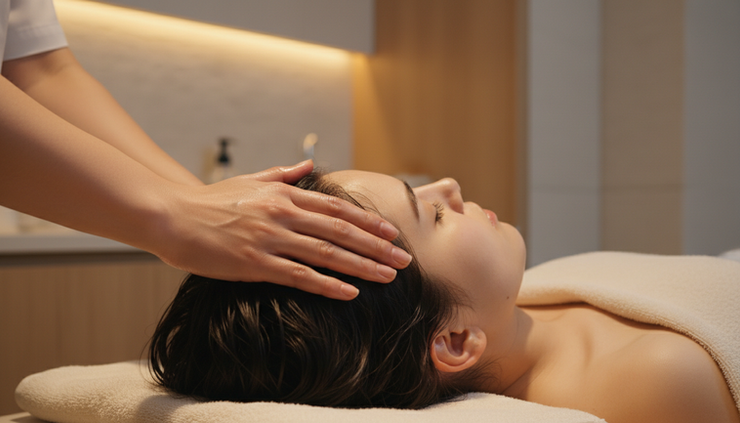
Massage across the scalp, temples, neck, and shoulders
A nourishing hair or scalp treatment
The result is not just clean hair. It is the feeling of having been cared for properly, without needing to explain why rest matters.
How it can reduce stress and ease tension
Stress often shows up physically before it becomes obvious mentally. People clench their jaw while concentrating. They hold their breath while rushing. They carry tension through the scalp, temples, and neck.
A Japanese head spa uses slow, repeated techniques that encourage the body to soften. The pressure is usually firm enough to feel satisfying, but gentle enough to remain calming. This steady rhythm can support relaxation in the same way that slow breathing, warm baths, or gentle stretching can.
Common stress-relieving elements include:
Circular scalp massage to release surface tension
Temple pressure to calm the muscles around the head
Neck and upper shoulder work to ease tightness from daily strain
Warm water flow to create a soothing sensory experience
A quiet environment that reduces noise and distraction
The treatment also gives permission to stop multitasking. There is no screen to check, no list to work through, and no conversation to manage unless preferred. That stillness is rare, and it can be surprisingly powerful.
Why it may help with focus
Good focus does not only come from more effort. Often, it comes from giving the mind a proper break.
When the brain has been switching between messages, errands, deadlines, and decisions, it can start to feel foggy. A head spa interrupts that cycle. The quiet, repeated sensations give attention somewhere simple to rest. After the session, many people describe feeling lighter, clearer, and less mentally cluttered.
There is also a practical reason for this. During a relaxing treatment, breathing often slows. Muscles ease. Sensory input becomes gentle and predictable. These changes can help the mind feel less overloaded.
A head spa will not replace sleep, healthy food, or time away from stress. Still, it can support a better rhythm of recovery. For a busy person, that matters. Energy is easier to protect when self-care is planned before burnout sets in.
The unique techniques that make it different
A Japanese head spa stands apart because it treats the scalp with the same care often given to facial skin. The scalp is cleansed, massaged, and nourished rather than treated as an afterthought.
One key technique is detailed scalp massage. Therapists often use the fingertips to work in small circles, lifting and moving the scalp rather than simply rubbing the hair. This can feel deeply grounding.
Another is the use of warm water in a slow, almost ritual-like way. Instead of a quick rinse, water becomes part of the relaxation. The sound, warmth, and movement all help create a sense of calm.
Some treatments also include scalp exfoliation or clarifying products to help remove build-up from styling products, oil, and pollution. This can leave the scalp feeling fresher and the hair feeling lighter. Nourishing masks or treatments may follow, depending on hair type and scalp needs.
The best sessions feel unhurried, even when they are not especially long. Every step has a purpose.

How to fit a head spa into a hectic schedule
Self-care often fails when it feels too large. The trick is to make it easy to choose.
Start by treating a head spa session like any other appointment. Put it in the diary, choose a realistic time, and avoid placing it between two rushed commitments if possible. The benefit grows when there is a little breathing room around it.
Try these simple approaches:
Book at the start of the month
Planning ahead removes the need to “find time” later.
Use a lunch break wisely
A shorter session can still reset the day if the location is convenient.
Choose a quieter weekday slot
This can make the whole experience feel calmer from arrival to departure.
Pair it with an existing routine
Book near a haircut, gym visit, or weekly errand so it becomes part of life rather than another task.
Protect the hour after
Avoid jumping straight into a stressful call or crowded journey if you can.
If weekly self-care feels unrealistic, try monthly. If monthly feels too much, book seasonally. Consistency helps, but it does not need to be perfect.
Making the calm last after the treatment
The session itself is only part of the benefit. A few small habits can stretch that calm into the rest of the day.
Drink some water afterwards, especially if the treatment included a long massage. Keep the rest of your schedule as light as possible. Let your hair and scalp enjoy the freshness before loading on heavy styling products.
At home, you can support the same feeling with a two-minute scalp massage while shampooing. Use the pads of your fingers, not your nails. Move slowly around the hairline, temples, crown, and base of the skull.
A head spa can also become a useful reminder. Rest does not need to be earned through exhaustion. It works best when it becomes part of maintenance, like sleep, movement, and nourishing food.

A small pause can change the pace of the week
A Japanese head spa offers more than a clean scalp and soft hair. It creates a rare pocket of quiet, using touch, warmth, and careful technique to help the body slow down.
For busy lives, that kind of pause is not indulgent. It is maintenance. When stress drops, focus often improves. When the body feels cared for, the mind has more room to breathe.
The next time the week feels too full, self-care does not have to mean doing more. It may mean lying back, closing your eyes, and letting someone gently take care of the part of you that carries so much of the day.


Comments